
Table of Contents
Fire Sprinkler Inspection Checklist (NFPA 25)


A fire sprinkler inspection checklist lists the visual inspections, tests and maintenance that NFPA 25 calls for on a water-based fire protection system, grouped by how often they're due. This one covers wet and dry pipe sprinkler systems. Fire pumps, standpipes, water tanks and private hydrants have their own chapters in NFPA 25.
The intervals below follow recent editions of NFPA 25. The edition your authority having jurisdiction (AHJ) has adopted, state rules and the owner's insurer can change them, so check before you build your form.
Reviewed November 6, 2026.
Fire sprinkler inspection frequencies at a glance
NFPA 25 spreads the work across weekly, monthly, quarterly, annual and multi-year tasks. Building owners often handle the weekly and monthly checks, and a contractor handles the rest.
- Weekly: sealed control valves; gauges on dry pipe, preaction and deluge systems.
- Monthly: locked or electrically supervised control valves; gauges on wet pipe systems; dry system gauges where the air pressure is supervised.
- Quarterly: waterflow alarm and supervisory devices (inspection); fire department connections; mechanical waterflow alarms such as water motor gongs (test).
- Semiannually: vane-type and pressure switch waterflow alarms (test).
- Annually: sprinklers, pipe, fittings, hangers and seismic bracing; the spare sprinkler cabinet; main drain test; control valve operation; antifreeze solution test; dry pipe valve partial trip test; backflow preventer forward flow test.
- Every 3 years: full flow trip test of dry pipe valves.
- Every 5 years: internal assessment of the piping; gauges replaced or tested against a calibrated gauge; sprinklers in harsh environments and extra-high temperature sprinklers tested.
- Every 10 years: dry sprinklers tested or replaced.
- By age: standard-response sprinklers sampled and tested at 50 years and fast-response sprinklers at 20 years, then every 10 years.
Before you walk the building
- Notify the monitoring company and the building contact before you flow water or operate valves.
- Follow the impairment procedure in NFPA 25 if any system will be out of service: an impairment coordinator, a tag at the riser and the fire department connection, and a fire watch if the AHJ requires one.
- Review the last report and the open deficiency list.
- Make sure the drains can take the flow from the main drain test.
Control valves and riser checklist
Control valves must be open, secured and easy to reach, because NFPA research has found that a system shut off before the fire is the leading reason sprinklers fail to operate.
- Each valve in its normal open position.
- Sealed, locked or supervised as required, with the seal or lock intact.
- Accessible, not leaking and marked with an identification sign.
- Gauges reading normal, with supply and system pressures recorded.
- Alarm valve and trim in good condition, with no leaks at the retard chamber.
- Hydraulic nameplate attached and legible.
Sprinklers, pipe and hangers checklist
Sprinklers are inspected from the floor, looking for anything that would stop them opening or spraying properly.
- No leaks, corrosion, paint, damage or loading such as dust, lint or grease.
- Correct orientation, with no missing escutcheons or cover plates.
- Nothing blocking the spray pattern, and storage kept well below the deflectors (18 inches is the usual minimum clearance).
- Pipe and fittings not leaking, damaged or used to hang other things.
- Hangers and seismic braces in place and tight.
- Spare sprinkler cabinet stocked with the right types and a sprinkler wrench: at least 6 spares for systems under 300 sprinklers, 12 for 300 to 1,000 and 24 above 1,000.
Alarms and supervisory devices checklist
- Waterflow alarm operates when water flows from the inspector's test connection, and the signal reaches the fire alarm panel and the monitoring station.
- Valve tamper switches send a supervisory signal when a valve moves off its normal position.
- The outside bell or horn-strobe works and is not damaged.
- Water motor gongs ring during the quarterly test.
The electrical side of these devices is also tested under NFPA 72, so coordinate with the fire alarm inspection checklist when both happen on the same visit.
Dry pipe system checklist
- Air or nitrogen pressure and water pressure recorded and in the normal range.
- Priming water level correct.
- Quick-opening device, if fitted, in service.
- Valve enclosure kept at 40°F (4°C) or warmer.
- Low point drains drained before freezing weather and after any trip test.
- Air compressor or nitrogen generator working.
Fire department connection checklist
- Visible and easy to reach, with no obstructions.
- Caps or plugs in place, swivels turning freely and gaskets in good condition.
- Check valve not leaking and the drain working.
- A sign shows which system or area it serves.
How to run the main drain test
A main drain test compares the static and residual pressure at the riser with earlier results, to show whether the water supply or the valves have changed. Record the static pressure, open the main drain fully, record the residual pressure once it settles, then close the drain slowly and note how the pressure recovers. NFPA 25 asks you to find the cause when full flow pressure drops by 10 percent or more from earlier results.
What goes in a fire sprinkler inspection report
- Property, system type and the areas each system serves
- Date, inspector's name and license
- Every item inspected or tested, with the result
- Gauge readings, and main drain static and residual pressures next to the previous results
- Deficiencies, and impairments with who was told and when
- Recommended repairs
- Signatures from the inspector and the owner's representative
Some AHJs ask you to sort deficiencies by severity, and some require their own report form, so check local rules. NFPA 25 asks owners to keep records for one year after the next inspection, test or maintenance of the same type.
Run this checklist in Clevra
Build the checklist once in Clevra, split into the same sections as above, with number fields for gauge and drain readings, yes or no questions, photo questions and a signature. Mark the critical items required so a visit can't close with the main drain readings blank.
- Set the building up as a recurring job, so quarterly and annual visits land on the schedule before you leave.
- Your tech fills the checklist on site in the phone's browser or the Technician app (iOS beta), with photos and a signature.
- Switch on Client report and Clevra issues a numbered PDF with your logo, photos and a sign-off, sent by email or a secure link.
- Turn each deficiency into an estimate on the same job.
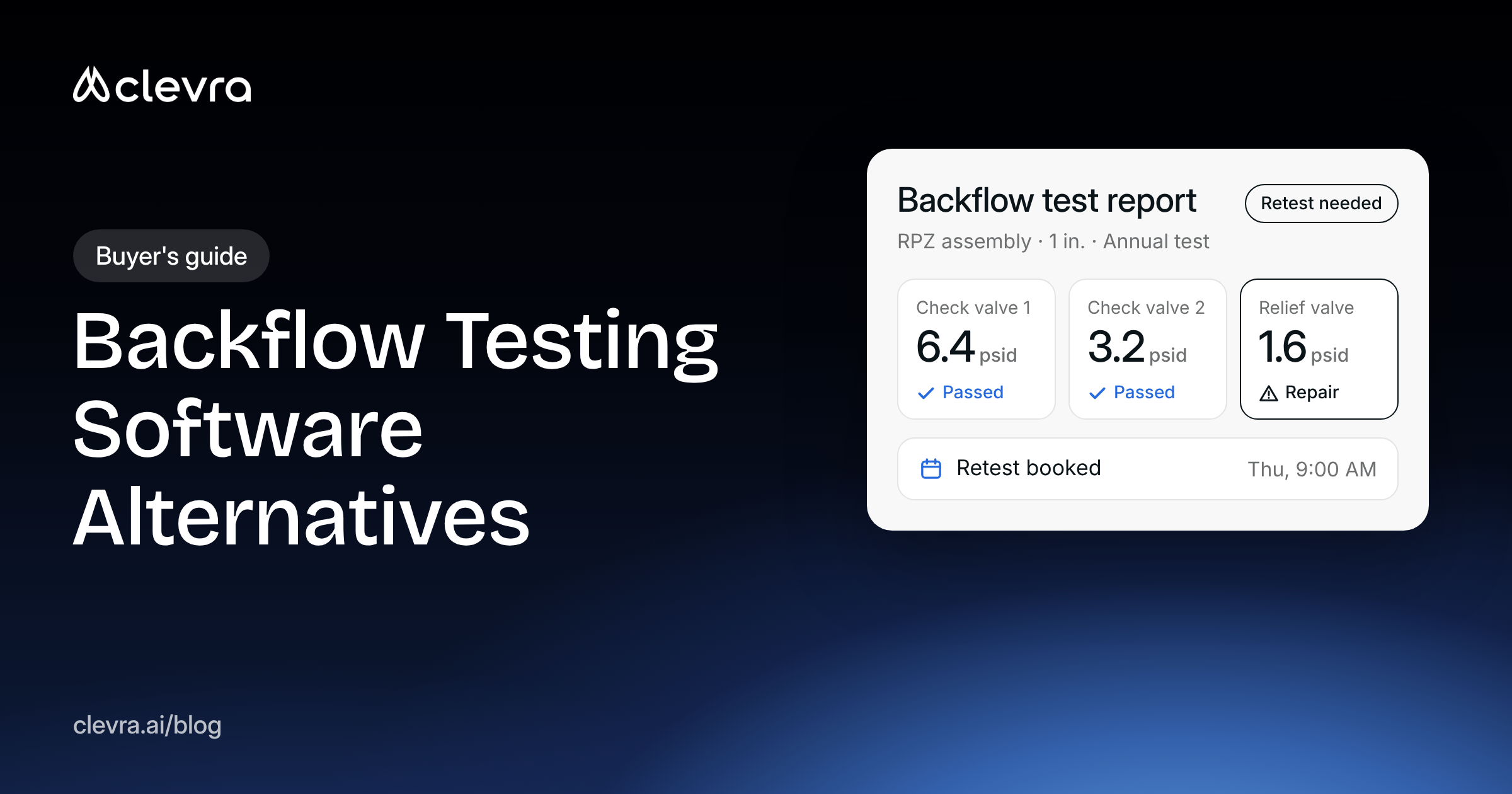
If the riser has a backflow preventer, its annual forward flow test pairs well with a backflow test on the same visit. See backflow testing software and our free backflow test report template. Clevra makes its own PDF and doesn't file with AHJ portals. Checklists and inspection reports come with Pro and Business; see inspection reports and fire inspection software.
Fire sprinkler inspection FAQ
How often do fire sprinklers need to be inspected?
NFPA 25 sets weekly and monthly checks of valves and gauges, quarterly inspection of alarm devices and fire department connections, and an annual inspection of the sprinklers, pipe and hangers. Some tasks run every 3, 5 or 10 years.
What is a 5-year sprinkler inspection?
The 5-year inspection adds an internal assessment of the piping for corrosion and obstructions, testing or replacing gauges, and testing sprinklers in harsh environments. It happens alongside the annual work in that year.
What is a main drain test?
A test that opens the main drain at the riser and compares static and residual pressure with earlier results. A drop of 10 percent or more means something has changed and the cause needs to be found.
How long should sprinkler inspection records be kept?
NFPA 25 asks owners to keep records for one year after the next inspection, test or maintenance of the same type. Some AHJs ask for longer.
Who can inspect a fire sprinkler system?
NFPA 25 requires qualified people, and many states license sprinkler inspection contractors. Building owners can do some weekly and monthly checks themselves where the AHJ allows it.
Try it on your next inspection
Build the checklist once, run it on one building, and send the report the same day. The Free plan has no end date, and Pro or Business are free for 14 days, no card needed.
Get Started for Free or Book a Demo.
Source: NFPA 25, Standard for the Inspection, Testing, and Maintenance of Water-Based Fire Protection Systems. Check the edition your AHJ has adopted.



All-in-one operations platform for trades.
You run a crew, not a tech company. Clevra handles the office stuff so you can stay on the tools.